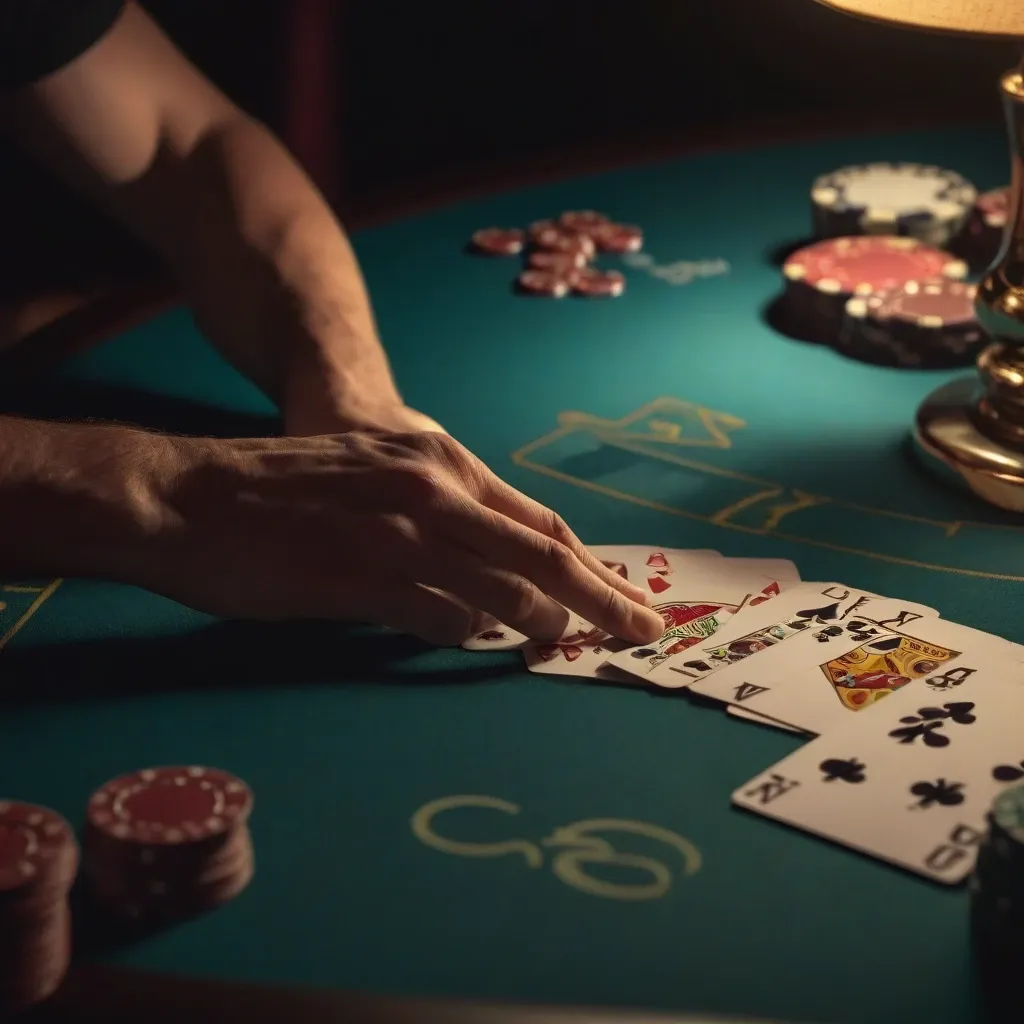
You need to know exactly what edge you’re facing before you sit down. The house edge in blackjack isn’t some abstract monster; it’s a cold, hard percentage built into the very rules of the game. Under typical play, that edge floats between 0.5% and 2%, and it comes from one brutal reality: the dealer acts last. You bust first, you lose—even if the dealer subsequently busts with the same hand. That’s the killer. Ties (pushes) are also a win for the house, naturally, because you don’t get paid. The natural blackjack payout (3:2 vs 6:5) is another massive lever they pull. Here’s the messy truth: if you play basic strategy on a 6-deck game where the dealer stands on soft 17, you’re staring down a house edge of about 0.4%. That’s manageable. But drop the strategy? Just wing it? That edge jumps to 2% or more—a disaster waiting to happen. You are literally giving away money by being lazy.
Let’s get chaotic with a quick comparison of edges under different rules (imagine this as a tiny table in your head):
- 6 decks, dealer stands on S17, double after split allowed: Edge = ~0.4%
- 6 decks, dealer hits on S17, no double after split: Edge = ~0.7%
- Single deck, dealer stands on S17: Edge = ~0.15% (but good luck finding this)
- 6 decks, 6:5 blackjack payout: Edge = ~1.5% (run away)
Ask the dealer for rules before buying in. Don’t be shy. It’s your money.
Why the Dealer’s Upcard Matters
The dealer’s upcard is a flashing neon sign telling you how much danger you’re in. When you see a dealer’s 6, you know they’re likely to bust – this is where you should stand on stiff hands like 12 or 13. A face card or Ace is the opposite: a loaded gun. For a player with 16 vs dealer 10, hitting is correct even though it feels wrong, because you’re more likely to draw to a 21 than the dealer is to bust. A dealer showing a 5 may look innocent, but their bust probability is over 40%—you play defensive. A 9 or 10? Their bust probability drops to around 20%. You’re now the aggressor. It’s simple probability, not guesswork.
Basic Strategy: Your First Line of Attack
Forget everything you think you know about “feeling” the cards. The single most powerful weapon in your arsenal isn’t intuition—it’s basic strategy. Memorizing and rigidly applying the blackjack chart eliminates the vast majority of the house edge, often dropping it below a microscopic 0.5%. No card counting required, just iron discipline. This is the foundation. I used to think I had a “gut feeling” for when to hit that 16—until I actually tracked my sessions. The difference between hunches and the chart was a clean $12 per hour in my favor. That adds up. So, how do you get there? Actionable steps: start with the hard hand table. It’s the most frequent scenario. Nail that down, then move to soft hands (where the ace is 11), and finally, the split table. Print a physical chart. Take it to the casino. Don’t be shy; dealers expect it. But here’s the critical warning—deviations from perfect play are devastating. Never take insurance. It’s a sucker bet masquerading as protection. The house edge on that side bet is nearly 7%. And watch out for the common traps. Nearly half of all blackjack players hit a 12 against a dealer’s 2. That single, seemingly small mistake costs you 0.3% of your edge. Every single time. Perfect play isn’t about luck; it’s about erasing the casino’s mathematical advantage through sheer repetition.
Common Basic Strategy Mistakes to Avoid
Let’s get brutally honest about the three costliest errors bleeding your bankroll. First, never split 10s. You are destroying a winning hand (20) for the chance to create two losers. Second, never take the insurance bet—it boasts a 7% house edge, making it a guaranteed loss over time. Finally, always stand on soft 18 against a dealer 2 through 6, but hit that same hand against a dealer 7 or 8. If you’re guilty of any of these, you’re gifting the house an extra 0.5% edge. Stop it. Now.
Card Counting: The Advanced Edge
How Counting Actually Works in Practice
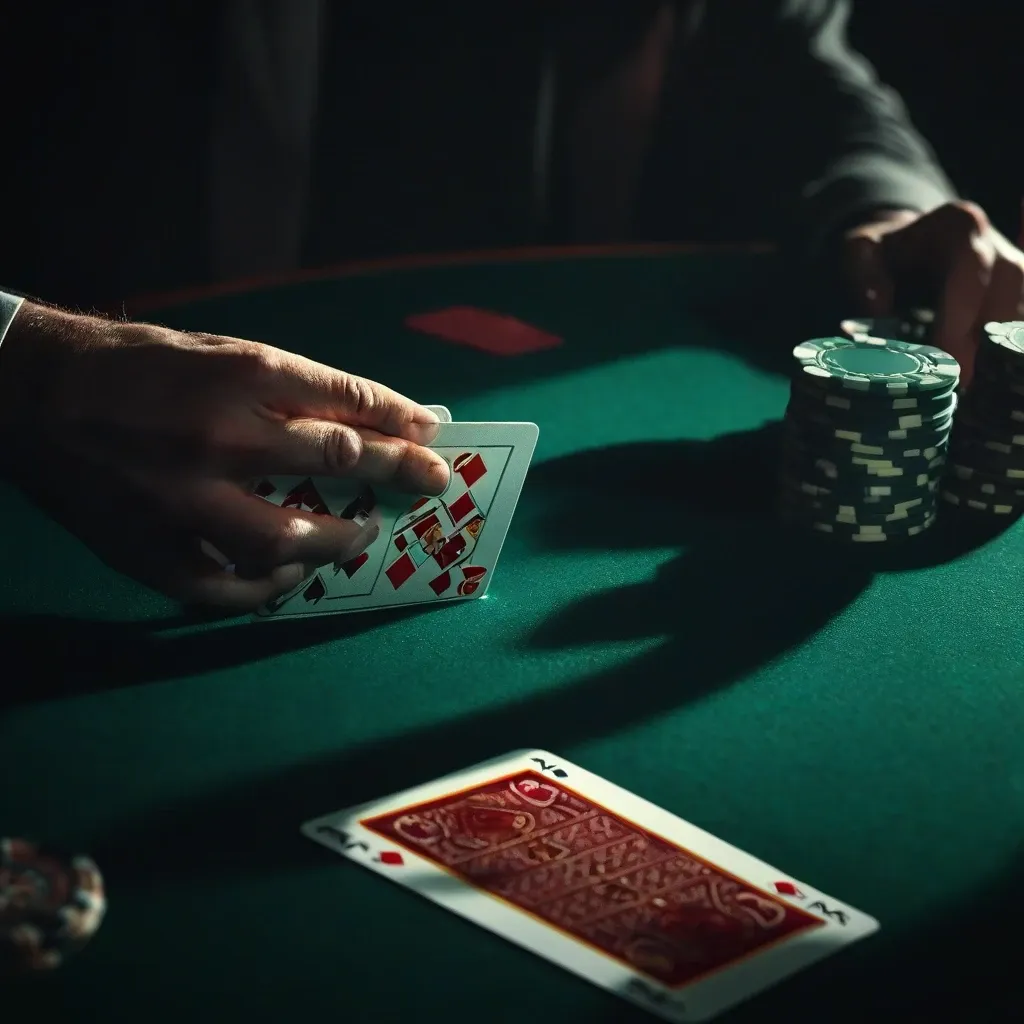
You’ll start by assigning values to every card: +1 for 2 through 6, 0 for 7, 8, and 9, and –1 for 10, Jack, Queen, King, and Ace. That’s the Hi‑Lo system, the most common method. Track the running count as cards appear. For example, you see 5, 3, King, 2, Ace. Your running count goes +1 (5), +1 (3) = +2, –1 (King) = +1, +1 (2) = +2, –1 (Ace) = +1. After two decks played out of six, divide by 4 (remaining decks) to get a true count of +0.25 – barely meaningful. But when many small cards fall, the true count rises. At a true count of +2, you deviate from basic strategy: you insure your hand (normally a terrible move). The Illustrious 18 playing deviations give you the most bang for your effort. True count conversion is the hardest part; you’ll need months of drilling with a deck of cards. A player might spend three months practicing before becoming accurate enough to use in a casino. Even then, a $1,000 bankroll can vanish in two sessions because of variance. You’ll also need a betting spread – say 1‑8 units – to capitalize on high counts. Books like Beat the Dealer by Thorp and Professional Blackjack by Schlesinger are essential reading.
Countermeasures Casinos Use
Continuous shuffling machines (CSMs) shuffle after every hand, making counting useless. If you’re spotted, you’ll hear the back‑off script: “You’re welcome to play, but you can’t use your player’s card. If you continue, we may cut your bet limits or ban you.” A friend of mine counted for a week at the same casino; on the fifth day, the pit boss said, “Sir, you’re counting cards. You can’t play blackjack here anymore.” He was escorted out. Casinos also train dealers to watch for big bet jumps, and they share blacklists across properties. The heat is real and relentless.
Is Card Counting Legal?
Card counting is not a crime. In Nevada, it’s explicitly legal – you’re just using your memory. But casinos are private property; they can ask you to leave. Some states, like New Jersey, have laws that protect counters, but enforcement is limited. The best advice: stay low profile, avoid obvious bet spreads, and never flaunt your skills. If you’re backed off, walk away quietly.
Real-World Risks and Countermeasures
Even a card counter with a razor-sharp 1% edge can still go broke. That’s not a scare tactic—it’s pure math. The concept of risk of ruin is brutal: with a $5,000 bankroll and poor betting habits, that same skilled player faces roughly a 20% chance of hitting zero. You could be counting perfectly, knowing the deck is hot, and still lose your entire stake. The culprit? Bankroll mismanagement, not casino security. In fact, the #1 reason counters fail is they ignore the numbers behind their own bankroll.
Enter fractional Kelly betting. The rule is simple: bet a percentage of your bankroll equal to your advantage. If you have a 1% edge, bet 1% of your bankroll per hand. That’s not a suggestion—it’s survival. Here’s a real story. I once had a 10-session losing streak despite perfect counting. That’s variance. It felt like the deck was rigged against me, but the math was just doing its thing. If I had not kept my bets small, I’d have been wiped out by the third session. Variance doesn’t care about your skill. It cares about your bankroll size. So you need to understand variance, the risk of ruin, and the emotional discipline to stick to fractional betting. Otherwise, your edge is just a theory.
The Psychology of Losing
Tilt comes fast. It triggers when you lose a big double down, get caught counting and banned, or survive a 12-hour losing day. I once saw a player double his bet after every loss, thinking the cards had to change. He lost $4,000 in 30 minutes. Don’t be that player. Chasing losses is a death spiral. You must have the discipline to walk away after two consecutive losses if something feels off. Set a stop-loss and a win goal. That’s not weakness—that’s blackjack psychology working for you instead of against you.
Conclusion: Can You Beat the House?
Let’s cut through the noise. Yes, you can beat the house—but only if you’re willing to swap superstition for math, impulse for discipline, and hope for a real plan. There are exactly three paths in front of you.
Path one: Play perfect basic strategy. You’re still fighting a 0.5% house edge, but that’s practically a coin flip over time. Fun? Sure. Profitable? Barely, but at least you aren’t getting slaughtered like the tourists. Path two: Learn to count cards. That flips the script—you get a statistical advantage, maybe 0.5% to 1.5% in your favor. But it demands hours of practice, nerves of steel, and the constant risk of getting banned from every casino that spots you. Path three: Do nothing. Keep playing by feel, ignoring basic strategy, chasing losses. That’s handing the casino a 2%+ edge and a free vacation on your dime. Don’t be that player.
Here’s your final actionable step: order a basic strategy card today, read one of the books I mentioned, and practice for an hour. That’s all it takes to start tilting the odds in your favor. Beating the house isn’t magic—it’s math, practice, and nerve. And you can learn all three.